http://www-01.ibm.com/software/tivoli/solutions/security/
-
http://www-03.ibm.com/security/
-
http://www.ibm.com/ibm/ideasfromibm/us/xforce/20080318/index.shtml?sa_campaign=message/ideas/leadspace/all/xforceflash
-
http://www-03.ibm.com/innovation/us/adv/start/index.shtml?ca=agus_brdoingtvlp-20080401&me=vanity&met=doing&re=doing&s_tact=106aw01w&cm_mmc=106aw01w-_-p-_-doing-doing-_-agus_brdoingtvlp-20080401#
-
http://en.wikipedia.org/wiki/GlobalSecurity.org
-
{Identity management in the 21st century: Balancing safety, security and liberty in a global environment
"Governments should move to implement cohesive and collaborative identity management systems to provide safe cross-border travel, inhibit crime and terrorism and provide for data safety and privacy for their citizens."}
http://www-935.ibm.com/services/us/index.wss/ibvstudy/gbs/a1029016?cntxt=a1005266
-
There is always the potential for technology to be abused & for power to exceed its appropriate
boundaries. It has happened before. http://www.ibmandtheholocaust.com/
http://en.wikipedia.org/wiki/IBM_and_the_Holocaust
http://en.wikipedia.org/wiki/Edwin_Black#The_Transfer_Agreement
-
http://multiverseextra.blogspot.com/2008/11/web-warriors.html
Sunday, November 23, 2008
Saturday, November 22, 2008
CBC: Web Warriors
Premiering On: Thursday November 20, 2008 at 9 pm on CBC-TV
{The internet is touted as one of the most important inventions in the history of modern man, and like the discovery of the atom, its ability to benefit mankind is matched only by its potential to unleash massive destruction.
Web Warriors is a one-hour documentary that offers an unprecedented glimpse into the world's newest and most vulnerable frontier: cyberspace. We enter the world of hackers like Mafia Boy - a 15 year old high school student who rose to infamy in 2000 by causing millions of dollars in damage after single-handedly shutting down internet giants - including Yahoo, Amazon, eBay, Dell, eTrade, and CNN.
We'll meet hackers like Donnie who goes on a journey into the Russian cyber underground as he searches for the creators of a computer virus with the hopes of collecting the $250,000 bounty being offered by Microsoft.
Just as in nature, computer viruses have rapidly evolved and now have the ability to control millions of computers unbeknownst to their owners, thereby creating massive illegal computer networks known as "Botnets".
These "Botnets" are being put to a variety of illicit uses including identity theft and cyber extortion, but they are also the latest and most potent weapon being deployed in military conflicts. Web Warriors dissects the massive cyber attack against Estonia in 2007 which virtually shut down the country and resulted in NATO deploying its cyber response team.
Web Warriors offers rare interviews with cyber sleuths from the FBI, the Pentagon, NATO, and the Department of Homeland Security who explain how cyberspace has become the latest battle ground between nation states and how terrorist groups are already plotting their next move.
Web Warriors offers a fast-paced never-seen before glimpse into the cyber trenches of a world wide battle. Some reports say the cost of cyber crime is now on par with the illegal drug trade.
Web Warriors was produced by Edward Peill for Tell Tale Productions Inc.}
http://www.cbc.ca/documentaries/doczone/2008/webwarriors/
-
{U.S.-Canada Cooperation on Wireless SecurityIn December 2001, then-Governor Tom Ridge and Canadian Deputy Prime Minister John Manley signed the "Smart Border" Declaration and associated 30-point Action Plan to enhance the security of our shared border while facilitating the legitimate flow of people and goods. The action plan has four pillars: the secure flow of people, the secure flow of goods, secure infrastructure, and information sharing and coordination in the enforcement of these objectives. In October 2003, then Secretary of Homeland Security Tom Ridge and Canadian Deputy Prime Minister John Manley released their fourth progress report on the Smart Border Action Plan. The report outlines the significant accomplishments in modernizing the Canada-United States border since the signing of the Smart Border Declaration. This includes the completion of negotiations and an agreement in principle on the text of a legally binding bilateral agreement on science and technology cooperation for protecting our shared critical infrastructure and enhancing border security. As part of this science and technology cooperation, the Center is supporting DHS S&T officials in cooperation projects with their Canadian counterparts. These cyber security projects are focused on secure wireless data communication systems for homeland security agencies on both sides of the border.}
http://www.cyber.st.dhs.gov/ongoing.html#cooperation
-
USA & Canada
{Cyber-security
See also: Cyber-security regulation
The DHS National Cyber Security Division (NCSD) is responsible for the response system, risk management program, and requirements for cyber-security in the U.S. The division is home to US-CERT operations and the National Cyber Alert System.[18][19] The DHS Science and Technology Directorate helps government and private end-users transition to new cyber-security capabilities. This directorate also funds the Cyber Security Research and Development Center, which identifies and prioritizes research and development for NCSD.[19] The center works on the Internet's routing infrastructure (the SPRI program) and Domain Name System (DNSSEC), identity theft and other online criminal activity (ITTC), Internet traffic and networks research (PREDICT datasets and the DETER testbed), Department of Defense and HSARPA exercises (Livewire and Determined Promise), and wireless security in cooperation with Canada.[20]} http://en.wikipedia.org/wiki/United_States_Department_of_Homeland_Security#Cyber-security
-
http://multiverseextra.blogspot.com/2008/11/virus-strikes-some-pentagon-computers.html
{The internet is touted as one of the most important inventions in the history of modern man, and like the discovery of the atom, its ability to benefit mankind is matched only by its potential to unleash massive destruction.
Web Warriors is a one-hour documentary that offers an unprecedented glimpse into the world's newest and most vulnerable frontier: cyberspace. We enter the world of hackers like Mafia Boy - a 15 year old high school student who rose to infamy in 2000 by causing millions of dollars in damage after single-handedly shutting down internet giants - including Yahoo, Amazon, eBay, Dell, eTrade, and CNN.
We'll meet hackers like Donnie who goes on a journey into the Russian cyber underground as he searches for the creators of a computer virus with the hopes of collecting the $250,000 bounty being offered by Microsoft.
Just as in nature, computer viruses have rapidly evolved and now have the ability to control millions of computers unbeknownst to their owners, thereby creating massive illegal computer networks known as "Botnets".
These "Botnets" are being put to a variety of illicit uses including identity theft and cyber extortion, but they are also the latest and most potent weapon being deployed in military conflicts. Web Warriors dissects the massive cyber attack against Estonia in 2007 which virtually shut down the country and resulted in NATO deploying its cyber response team.
Web Warriors offers rare interviews with cyber sleuths from the FBI, the Pentagon, NATO, and the Department of Homeland Security who explain how cyberspace has become the latest battle ground between nation states and how terrorist groups are already plotting their next move.
Web Warriors offers a fast-paced never-seen before glimpse into the cyber trenches of a world wide battle. Some reports say the cost of cyber crime is now on par with the illegal drug trade.
Web Warriors was produced by Edward Peill for Tell Tale Productions Inc.}
http://www.cbc.ca/documentaries/doczone/2008/webwarriors/
-
{U.S.-Canada Cooperation on Wireless SecurityIn December 2001, then-Governor Tom Ridge and Canadian Deputy Prime Minister John Manley signed the "Smart Border" Declaration and associated 30-point Action Plan to enhance the security of our shared border while facilitating the legitimate flow of people and goods. The action plan has four pillars: the secure flow of people, the secure flow of goods, secure infrastructure, and information sharing and coordination in the enforcement of these objectives. In October 2003, then Secretary of Homeland Security Tom Ridge and Canadian Deputy Prime Minister John Manley released their fourth progress report on the Smart Border Action Plan. The report outlines the significant accomplishments in modernizing the Canada-United States border since the signing of the Smart Border Declaration. This includes the completion of negotiations and an agreement in principle on the text of a legally binding bilateral agreement on science and technology cooperation for protecting our shared critical infrastructure and enhancing border security. As part of this science and technology cooperation, the Center is supporting DHS S&T officials in cooperation projects with their Canadian counterparts. These cyber security projects are focused on secure wireless data communication systems for homeland security agencies on both sides of the border.}
http://www.cyber.st.dhs.gov/ongoing.html#cooperation
-
USA & Canada
{Cyber-security
See also: Cyber-security regulation
The DHS National Cyber Security Division (NCSD) is responsible for the response system, risk management program, and requirements for cyber-security in the U.S. The division is home to US-CERT operations and the National Cyber Alert System.[18][19] The DHS Science and Technology Directorate helps government and private end-users transition to new cyber-security capabilities. This directorate also funds the Cyber Security Research and Development Center, which identifies and prioritizes research and development for NCSD.[19] The center works on the Internet's routing infrastructure (the SPRI program) and Domain Name System (DNSSEC), identity theft and other online criminal activity (ITTC), Internet traffic and networks research (PREDICT datasets and the DETER testbed), Department of Defense and HSARPA exercises (Livewire and Determined Promise), and wireless security in cooperation with Canada.[20]} http://en.wikipedia.org/wiki/United_States_Department_of_Homeland_Security#Cyber-security
-
http://multiverseextra.blogspot.com/2008/11/virus-strikes-some-pentagon-computers.html

Virus strikes some Pentagon computers
Fri Nov 21, 1:13 PM
{WASHINGTON (AFP) - Some Defense Department computer networks have been infected with a "global virus" and steps are being taken to mitigate it, the Pentagon said Friday.
The acknowledgement followed reports that the military has banned the use of removable flash media like thumb drives or memory sticks in any Defense Department computer.
"We are aware of a global virus for which there are some public alerts on," said Bryan Whitman, Pentagon spokesman. "And we've seen some of this on our networks. And we're taking steps to identify and mitigate the virus."
Whitman would not identify the virus or say what steps have been taken, and it was not known whether the virus had spread to classified computer networks.
The Military Times newspaper, however, cited a November 17 air force memo that ordered the "immediate suspension" of the use of flash media on all unclassified and classified computer networks.
The Pentagon's global information grid includes about 17,000 local and regional networks and seven million individual computers, the newspaper said.}
http://ca.news.yahoo.com/s/afp/081121/usa/us_military_cyber
-
http://www.us-cert.gov/
http://news.cnet.com/8301-10784_3-9747666-7.html
http://www.dhs.gov/xabout/structure/editorial_0839.shtm
-
http://multiverseextra.blogspot.com/2008/11/blog-post_05.html
{WASHINGTON (AFP) - Some Defense Department computer networks have been infected with a "global virus" and steps are being taken to mitigate it, the Pentagon said Friday.
The acknowledgement followed reports that the military has banned the use of removable flash media like thumb drives or memory sticks in any Defense Department computer.
"We are aware of a global virus for which there are some public alerts on," said Bryan Whitman, Pentagon spokesman. "And we've seen some of this on our networks. And we're taking steps to identify and mitigate the virus."
Whitman would not identify the virus or say what steps have been taken, and it was not known whether the virus had spread to classified computer networks.
The Military Times newspaper, however, cited a November 17 air force memo that ordered the "immediate suspension" of the use of flash media on all unclassified and classified computer networks.
The Pentagon's global information grid includes about 17,000 local and regional networks and seven million individual computers, the newspaper said.}
http://ca.news.yahoo.com/s/afp/081121/usa/us_military_cyber
-
http://www.us-cert.gov/
http://news.cnet.com/8301-10784_3-9747666-7.html
http://www.dhs.gov/xabout/structure/editorial_0839.shtm
-
http://multiverseextra.blogspot.com/2008/11/blog-post_05.html
Friday, November 14, 2008
Neuroimaging Of Brain Shows Who Spoke To A Person And What Was Said
{ScienceDaily (Nov. 10, 2008) — Scientists from Maastricht University have developed a method to look into the brain of a person and read out who has spoken to him or her and what was said. With the help of neuroimaging and data mining techniques the researchers mapped the brain activity associated with the recognition of speech sounds and voices.
In their Science article "'Who' is Saying 'What'? Brain-Based Decoding of Human Voice and Speech," the four authors demonstrate that speech sounds and voices can be identified by means of a unique 'neural fingerprint' in the listener's brain. In the future this new knowledge could be used to improve computer systems for automatic speech and speaker recognition.
Seven study subjects listened to three different speech sounds (the vowels /a/, /i/ and /u/), spoken by three different people, while their brain activity was mapped using neuroimaging techniques (fMRI). With the help of data mining methods the researchers developed an algorithm to translate this brain activity into unique patterns that determine the identity of a speech sound or a voice. The various acoustic characteristics of vocal cord vibrations (neural patterns) were found to determine the brain activity.
Just like real fingerprints, these neural patterns are both unique and specific: the neural fingerprint of a speech sound does not change if uttered by somebody else and a speaker's fingerprint remains the same, even if this person says something different.
Moreover, this study revealed that part of the complex sound-decoding process takes place in areas of the brain previously just associated with the early stages of sound processing. Existing neurocognitive models assume that processing sounds actively involves different regions of the brain according to a certain hierarchy: after a simple processing in the auditory cortex the more complex analysis (speech sounds into words) takes place in specialised regions of the brain. However, the findings from this study imply a less hierarchal processing of speech that is spread out more across the brain.
The research was partly funded by the Netherlands Organisation for Scientific Research (NWO): Two of the four authors, Elia Formisano and Milene Bonte carried out their research with an NWO grant (Vidi and Veni). The data mining methods were developed during the PhD research of Federico De Martino (doctoral thesis defended at Maastricht University on 24 October 2008).
Journal reference:
Elia Formisano, Federico De Martino, Milene Bonte, Rainer Goebel. ”Who” is Saying “What”? Brain-Based Decoding of Human Voice and Speech. Science, November 2008
Adapted from materials provided by NWO (Netherlands Organization for Scientific Research).
http://www.sciencedaily.com/releases/2008/11/081110071240.htm}
-
http://www.earthpulse.com/src/category.asp?catid=12
In their Science article "'Who' is Saying 'What'? Brain-Based Decoding of Human Voice and Speech," the four authors demonstrate that speech sounds and voices can be identified by means of a unique 'neural fingerprint' in the listener's brain. In the future this new knowledge could be used to improve computer systems for automatic speech and speaker recognition.
Seven study subjects listened to three different speech sounds (the vowels /a/, /i/ and /u/), spoken by three different people, while their brain activity was mapped using neuroimaging techniques (fMRI). With the help of data mining methods the researchers developed an algorithm to translate this brain activity into unique patterns that determine the identity of a speech sound or a voice. The various acoustic characteristics of vocal cord vibrations (neural patterns) were found to determine the brain activity.
Just like real fingerprints, these neural patterns are both unique and specific: the neural fingerprint of a speech sound does not change if uttered by somebody else and a speaker's fingerprint remains the same, even if this person says something different.
Moreover, this study revealed that part of the complex sound-decoding process takes place in areas of the brain previously just associated with the early stages of sound processing. Existing neurocognitive models assume that processing sounds actively involves different regions of the brain according to a certain hierarchy: after a simple processing in the auditory cortex the more complex analysis (speech sounds into words) takes place in specialised regions of the brain. However, the findings from this study imply a less hierarchal processing of speech that is spread out more across the brain.
The research was partly funded by the Netherlands Organisation for Scientific Research (NWO): Two of the four authors, Elia Formisano and Milene Bonte carried out their research with an NWO grant (Vidi and Veni). The data mining methods were developed during the PhD research of Federico De Martino (doctoral thesis defended at Maastricht University on 24 October 2008).
Journal reference:
Elia Formisano, Federico De Martino, Milene Bonte, Rainer Goebel. ”Who” is Saying “What”? Brain-Based Decoding of Human Voice and Speech. Science, November 2008
Adapted from materials provided by NWO (Netherlands Organization for Scientific Research).
http://www.sciencedaily.com/releases/2008/11/081110071240.htm}
-
http://www.earthpulse.com/src/category.asp?catid=12
Wednesday, November 5, 2008
NuSA
 http://en.wikipedia.org/wiki/Cray-2#Uses_and_successors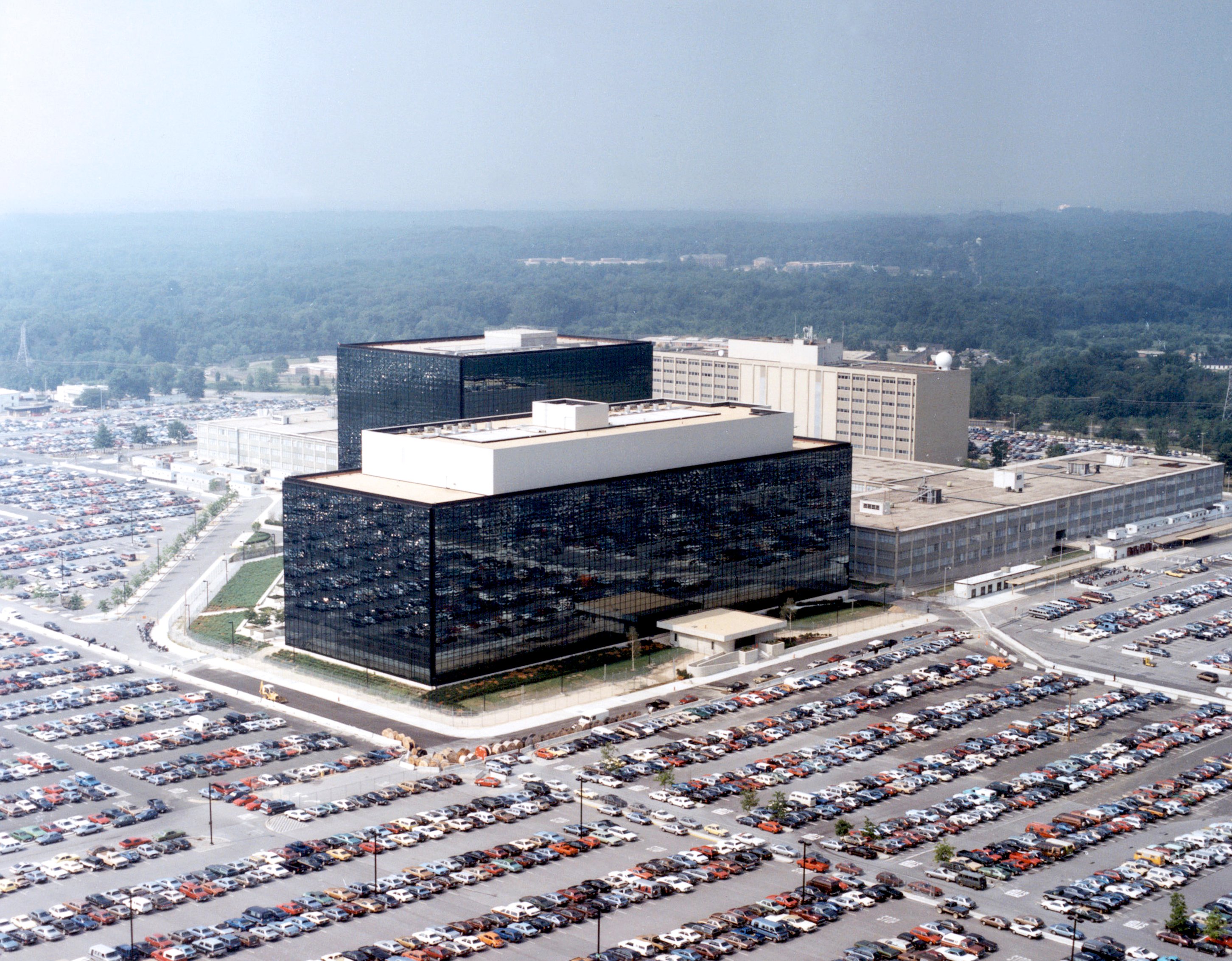
Mass_surveillance, its all about the tempting advancement of software & Hardware. Most people just don't have the time or interest in getting an overview of its extent . It all started with the Cray_X1. http://findarticles.com/p/articles/mi_m0CGN/is_3753/ai_55855489 Advanced_Encryption_Standard http://www.top500.org/2007_overview_recent_supercomputers/cray_inc_xt4
-
Mr. Marino has several interesting observations & claims about the use & abuse of technology & power.
JF Marino on "The Use Of SQUIDS (Superconducting Quantum Interference Devices) In Satellite Based Mind Control Technology"
-
-
-
Spy Satellites, NSA
-
http://www.spychips.com/
-
JF Marino, is very upset as to how various governments & corporations lie & abuse their powers.
http://9-11themotherofallblackoperations.blogspot.com/search?q=The+FBI%2FNSA+Conspiracy+To+Rape+Your+Minds+%26+Leave+You+As+New+World+Order+Vegetables+--+Don%27t+Let+Them+Get+Away+With+It+
http://www.spychips.com/
-
JF Marino, is very upset as to how various governments & corporations lie & abuse their powers.
http://9-11themotherofallblackoperations.blogspot.com/search?q=The+FBI%2FNSA+Conspiracy+To+Rape+Your+Minds+%26+Leave+You+As+New+World+Order+Vegetables+--+Don%27t+Let+Them+Get+Away+With+It+
-
This technology is here to stay from the powers that be. However, humanity must find a balance. Most people don't want the world to become a global technological fascist state.
Tuesday, November 4, 2008
Autism linked with rainfall in study
Tue Nov 4, 10:26 AM
{WASHINGTON (Reuters) - Children who live in the U.S. Northwest's wettest counties are more likely to have autism, but it is unclear why, U.S. researchers reported on Tuesday.
Michael Waldman of Cornell University and colleagues were searching for an environmental link with autism, a condition characterized by learning and social disabilities.
They got autism rates from state and county agencies for children born in California, Oregon and Washington between 1987 and 1999 and plotted them against daily precipitation reports.
"Autism prevalence rates for school-aged children in California, Oregon and Washington in 2005 were positively related to the amount of precipitation these counties received from 1987 through 2001," they wrote in the Archives of Pediatrics & Adolescent Medicine.
Dr. Michael Fitzpatrick, a London physician who wrote "Defeating Autism: A Damaging Delusion", expressed doubt, noting that autism diagnoses are on the rise in all climates.
No one know what causes autism, whose symptoms range from severe social avoidance to repetitive behaviors and sometimes profound mental retardation.
The U.S. Centers for Disease Control and Prevention estimates that about one in every 150 children has autism or a related disorder such as Asperger's Syndrome. Rates in many countries have been rising, although that may be partly due to increased reporting and diagnosis of the condition.
Doctors agree there is a genetic component to autism. They also theorize that something in the environment and possibly conditions in the womb can trigger the condition.
The researchers said their study supports this idea.
Perhaps infants and toddlers are kept are kept indoors in front of the TV more in rainy climates, and that somehow causes brain changes, they said. Or perhaps they breathe in more harmful chemicals while indoors.
Vitamin D deficiency caused by insufficient time in the sun might also be a trigger, they said.
"Finally, there is also the possibility that precipitation itself is more directly involved," they wrote. Perhaps a chemical or chemicals in the upper atmosphere are transported to the surface through rain or snow.
"In recent years autism has been blamed on everything from discarded iPod batteries to mercury from Chinese power stations, from antenatal ultrasound scans to post-natal cord clamping, from diet to vaccines," Fitzpatrick said in a statement.
The U.S. Centers for Disease Control and Prevention has launched a long-term study to find the causes of autism and other childhood conditions.
(Reporting by Maggie Fox; Editing by Michael Kahn and Alan Elsner)}
http://ca.news.yahoo.com/s/reuters/081104/science/science_us_autism_rain
-
http://en.wikipedia.org/wiki/Rain_Man
{WASHINGTON (Reuters) - Children who live in the U.S. Northwest's wettest counties are more likely to have autism, but it is unclear why, U.S. researchers reported on Tuesday.
Michael Waldman of Cornell University and colleagues were searching for an environmental link with autism, a condition characterized by learning and social disabilities.
They got autism rates from state and county agencies for children born in California, Oregon and Washington between 1987 and 1999 and plotted them against daily precipitation reports.
"Autism prevalence rates for school-aged children in California, Oregon and Washington in 2005 were positively related to the amount of precipitation these counties received from 1987 through 2001," they wrote in the Archives of Pediatrics & Adolescent Medicine.
Dr. Michael Fitzpatrick, a London physician who wrote "Defeating Autism: A Damaging Delusion", expressed doubt, noting that autism diagnoses are on the rise in all climates.
No one know what causes autism, whose symptoms range from severe social avoidance to repetitive behaviors and sometimes profound mental retardation.
The U.S. Centers for Disease Control and Prevention estimates that about one in every 150 children has autism or a related disorder such as Asperger's Syndrome. Rates in many countries have been rising, although that may be partly due to increased reporting and diagnosis of the condition.
Doctors agree there is a genetic component to autism. They also theorize that something in the environment and possibly conditions in the womb can trigger the condition.
The researchers said their study supports this idea.
Perhaps infants and toddlers are kept are kept indoors in front of the TV more in rainy climates, and that somehow causes brain changes, they said. Or perhaps they breathe in more harmful chemicals while indoors.
Vitamin D deficiency caused by insufficient time in the sun might also be a trigger, they said.
"Finally, there is also the possibility that precipitation itself is more directly involved," they wrote. Perhaps a chemical or chemicals in the upper atmosphere are transported to the surface through rain or snow.
"In recent years autism has been blamed on everything from discarded iPod batteries to mercury from Chinese power stations, from antenatal ultrasound scans to post-natal cord clamping, from diet to vaccines," Fitzpatrick said in a statement.
The U.S. Centers for Disease Control and Prevention has launched a long-term study to find the causes of autism and other childhood conditions.
(Reporting by Maggie Fox; Editing by Michael Kahn and Alan Elsner)}
http://ca.news.yahoo.com/s/reuters/081104/science/science_us_autism_rain
-
http://en.wikipedia.org/wiki/Rain_Man
Subscribe to:
Posts (Atom)